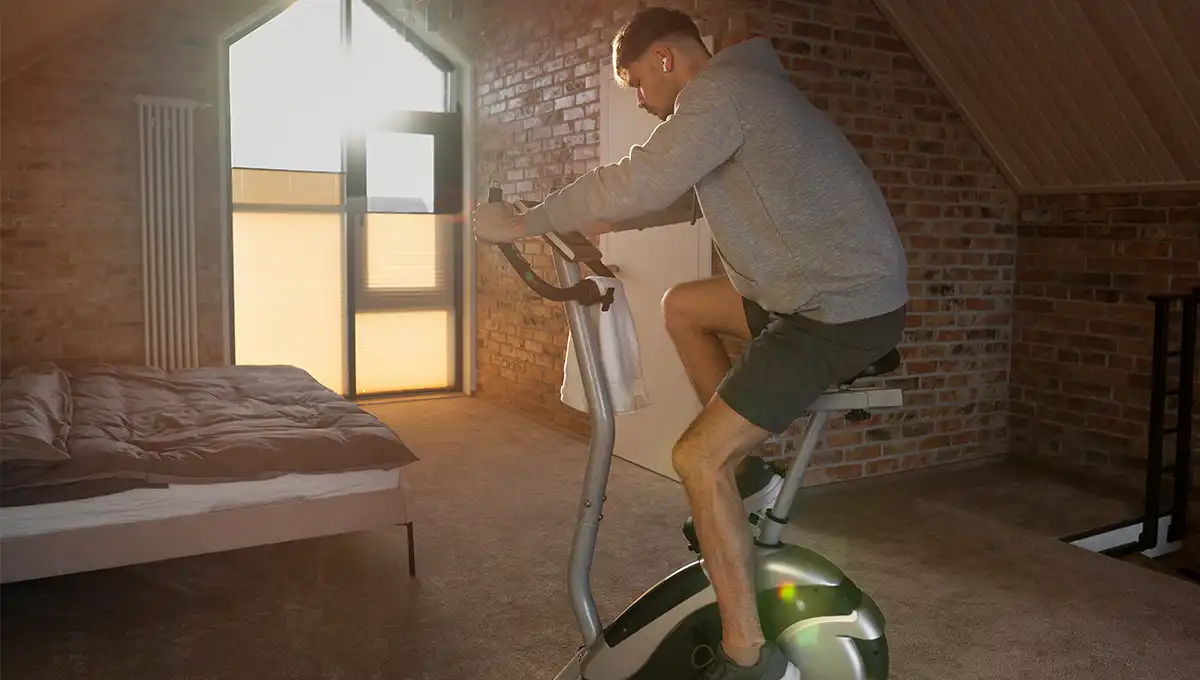
Skipping the gym commute sounds great until you realize you have no idea where to start building at home. Here's the truth: you don't need a commercial gym to get commercial-grade results.
Based on fitness fundamentals, the right home gym equipment delivers every bit of the progress a paid gym promises, minus the crowds, monthly fees, and wasted drive time.
Whether you have a full garage or just a spare corner, this guide breaks down exactly what to buy, when to buy it, and how to build a setup that grows with you. Let's get into it.
How to Choose the Right Home Gym Equipment for Your Goals
- Define Your Fitness Goals First - Everyone is unique so your fitness goal, then why go for the same equipment. Powerlifters need barbell sets, resistance bands that lead to weight loss and flexibility needs yoga. Make informed decisions by determining your fitness goals.
- Consider Space and Layout - Before you make any purchase, measure your space. For a beginner, a 6x6 ft space can accommodate a home gym consisting of dumbbell sets, a mat, and resistance bands. For those with a garage or basement, you can consider a barbell station or a cable machine. Ensure there is at least 3 feet of space around your equipment for ease of movement.
- Budget Planning for Beginners - For most newbies, you can build a decent home gym within a budget of $150 to $300. Start lean, build strong, and remember, home gyms are built over time, not in a single shopping trip.
Must-Have Home Gym Equipment for Every Setup
These three tools form the non-negotiable core of any effective home gym setup:
|
Equipment |
Best For |
Space Needed |
Avg. Cost |
Top Pick |
|
Adjustable Dumbbells |
Strength, muscle, flexibility |
Minimal |
$150–$350 |
|
|
Resistance Bands Set |
Full-body, mobility, rehab |
Almost none |
$20–$50 |
|
|
Flat/Adjustable Bench |
Pressing, rows, step-ups |
Moderate |
$100–$250 |
Why these three? Adjustable dumbbells can replace up to 15 sets of fixed dumbbells. Resistance bands provide joint-friendly variable resistance that free weights can’t.
The bench provides horizontal pressing and sitting movements that free weights can’t. Collectively, these three enable 80% of the exercises found in a commercial gym at a fraction of the cost.
Jeff Cavaliere of ATHLEAN-X, with over 14 million followers, consistently ranks dumbbell training first in terms of ROI for the home athlete.
Advanced Home Gym Equipment for Serious Training
Once your foundation is locked in, these additions dramatically expand what's possible:
- Barbell + Bumper Plates: The backbone of progressive overload. Deadlifts, squats, bench press. Shop Rogue Fitness or Titan Fitness for quality at competitive price points.
- Home Gym Cable Machine: Maintains constant tension through full range of motion, hitting angles dumbbells can't. Garage Gym Reviews rates the Body-Solid Powerline as a top compact pick.
- Pull-Up Bar: Minimal space, maximum back and core development. Door-mounted options start under $30.
Add these one at a time, based on where your current setup has gaps.
How to Build Your Home Gym Step-by-Step
Rather than having a mixed approach dividing it into phases saves you from overspending and underusing.
- Phase 1 Essentials (~$200): Adjustable dumbbells + resistance bands + a quality mat. This combo covers push, pull, and legs for beginners and intermediate lifters alike.
- Phase 2 Strength Focus (~$300 add-on): Add a flat bench and a barbell with plates. Now you can hit the big compound lifts, squats, deadlifts, bench press and apply real progressive overload.
- Phase 3 Full Setup (~$500+ add-on): Layer in a cable machine or pull-up station. At this point, your home gym rivals most commercial facilities for variety and effectiveness.
- Ongoing: Track your lifts, upgrade weights as you grow, and maintain equipment hygiene regularly.
Benefits of a Home Gym vs. Gym Membership
|
Home Gym |
Commercial Gym |
|
One-time investment, pays off in 1–2 years |
Monthly fee forever |
|
Available 24/7 |
Limited by hours |
|
Zero commute time |
20–30 min round trip |
|
Your rules, your music, your pace |
Shared space, shared equipment |
|
Scales with your goals |
You pay for gear you don't use |
Convenience is the #1 predictor of workout consistency. When your gym is steps away, you show up more. That alone makes the investment worth it for most people.
Common Mistakes to Avoid
- Buying all at once: Gear that you're not yet ready for is unnecessary clutter. Habits precede inventory.
- Not paying attention to your space: A squat rack that won't fit your ceiling height is a $500 mistake. Measure your space first. Always.
- Not prioritizing versatility: A single-purpose machine is useless in comparison to a good set of dumbbells. Don't get single-purpose machines until later.
- Lacking a clear goal: Without a clear idea of what you're working towards, all gear sounds essential. That's not true. None of it is.
Expert Tips to Maximize Results
Stick to a schedule : Three to five training days per week beats sporadic intense sessions every time. Consistency is the real secret weapon.
Form before weight. Bad technique with heavy loads leads to injury. Whitney Simmons of the Alive by Whitney app says structure and movement quality are what separate long-term progress from short-term frustration.
Keep it clean. Wipe down equipment after every session. Rubber mats, cables, and handles last far longer with basic upkeep.
Conclusion
You don't need a perfect gym, you need the right home gym equipment, and you need a plan to use it. Start with the essentials, build your habits, and build your home gym as you build your fitness.
The beauty of a home gym is that it meets you where you are, on your schedule, at your pace. Thousands of people have built their strongest bodies without ever stepping foot in a commercial gym.
You can too. Start with one, build the habit, and the rest will fall into place. Check out Garage Gym Reviews for some of the best equipment to get you started on your fitness journey.
FAQ’s
-
What is the best gym equipment to have at home?
The best home gym equipment includes an adjustable dumbbells set, resistance bands set, and basic weight lifting equipment for versatile full-body workouts. - What is the 3-3-3 rule gym?
The 3-3-3 rule means three exercises, three sets, and three times weekly, often used with home gym equipment for simple and consistent workout routines.
- What gym equipment is best for osteoarthritis?
Low-impact options like resistance bands set and light weight lifting equipment help improve mobility and reduce joint stress for osteoarthritis-friendly home workouts.
- Does Rogue Fitness accept HSA?
Rogue Fitness may allow HSA/FSA purchases for certain home gym equipment if medically necessary, but eligibility depends on your provider and documentation.
Comments (3)
John Doe - July 19, 2025
Great article! I particularly enjoyed the section on AI in healthcare. It's truly amazing how technology is transforming medicine.
Alice Smith - July 19, 2025
Very insightful. I'm curious about the ethical challenges of AI. Perhaps a future article could delve deeper into that?
Leave a Comment